A Telegram bot instead of an app: cheap entry into mobile
Your audience already has Telegram installed — no need to talk them into one more app. When a bot and a Mini App beat a store listing.

Full-stack developer
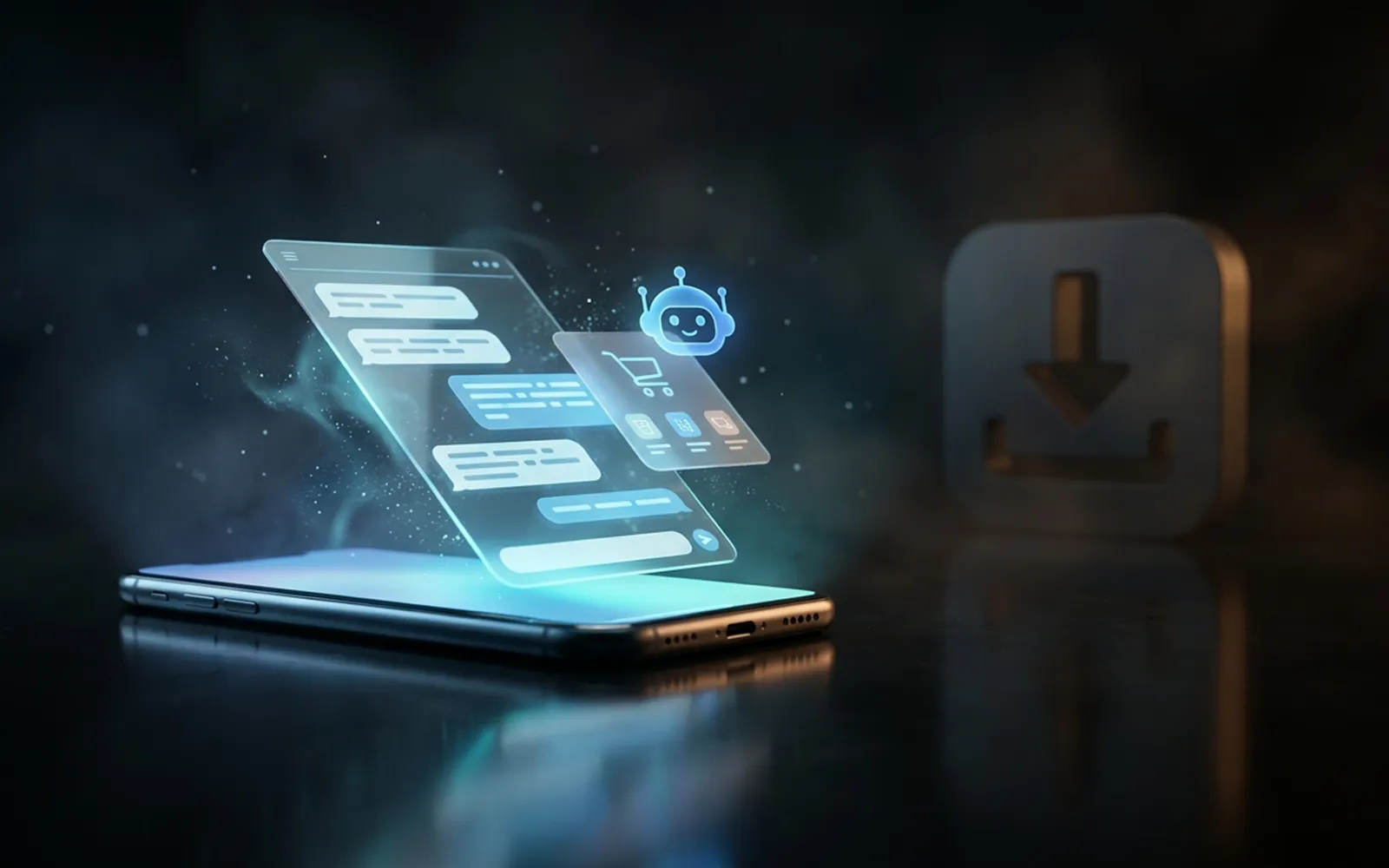
The main barrier for any app is installation. A person has to find it in the store, download it, register. Every step loses part of the audience. A Telegram bot removes that barrier: the customer is already in the messenger, and opening your bot is one click on a link.
Why installation kills conversion
Every extra step between desire and action means lost customers. “Download our app” sounds harmless, but the phrase hides a chain: open the store, find it, wait for the download, grant permissions, invent a password. At every link some people drop off, and only a few reach the first purchase. A Telegram bot shortens the path to a single tap — the person lands straight in the scenario, inside an app that’s already open on their phone all day.
What a bot can actually do today
- A store with a catalog, cart and Click / Payme / Uzum payments — right in the chat.
- Booking, reservations and leads that notify a manager the same second.
- A Mini App — a full interface inside Telegram, almost like a website, without leaving the messenger.
- Broadcasts and reminders to people who already bought from you — with no spend on new ads.
Where the line is
A bot won’t replace a complex product with heavy logic, an offline mode and its own ecosystem. But for sales, service and repeat touchpoints it’s often the fastest and cheapest channel. Our SaaS Grammerce builds exactly these store-bots with payment and inventory integrations — without building from scratch.
Why this works especially well here
In Uzbekistan and neighboring countries Telegram isn’t “one of the messengers” — it’s the primary communication environment: people text family there, read news and already buy things as a matter of habit. Ordering in a chat is culturally normal here — the “what is this bot” barrier barely exists. Add local payments — Click, Payme and Uzum plug into a bot directly — plus inventory system integrations, and you get a full sales channel inside the environment where your customer spends hours daily. For local business it’s a rare case of a technology trend and audience habits matching completely.
Frequently asked questions
- How long does a store-bot launch take? A typical catalog with a cart and payments — one to three weeks. On our SaaS Grammerce a basic store comes together even faster, because the core — catalog, cart, payments, notifications — is already built and proven in live stores.
- Is payment in a bot official? Yes: Click, Payme and Uzum connect as regular merchant payments, with receipts and accounting — exactly like on a website. For the buyer it’s familiar payment buttons; for your books, ordinary transactions.
- What does the owner see — is there analytics? Every order, abandoned cart and broadcast click is recorded. You see the funnel in numbers and a customer base with purchase history — in a regular app you’d spend months building that base through costly installs.
Checklist: bot or app
- Your audience already lives in Telegram — start with a bot, don’t fight for the install.
- The scenario fits “catalog → cart → payment → notification” — a bot or Mini App covers it fully.
- You need offline mode, heavy graphics or hardware access (Bluetooth, NFC) — that’s app territory.
- Repeat sales matter more than the first one — bot broadcasts to your own base are free, unlike new ads.
- Demand isn’t proven yet — test it with a bot in weeks, and build the app against confirmed numbers.
Lifehack: launch the bot as “version 0.1” of the product. You’ll gather a real customer base and learn the scenarios — and only then, if you hit Telegram’s ceiling, invest in a full app against demand you’ve already proven.
Got a project, not just a read?
Tell us about it — we'll put together a solution for your business.