AI video for business: an ad without a film crew
How we assemble ads and avatars with Sora, Runway and HeyGen — in days, not weeks, and without renting a studio. And where AI still loses to live shooting.
AI video, motion design
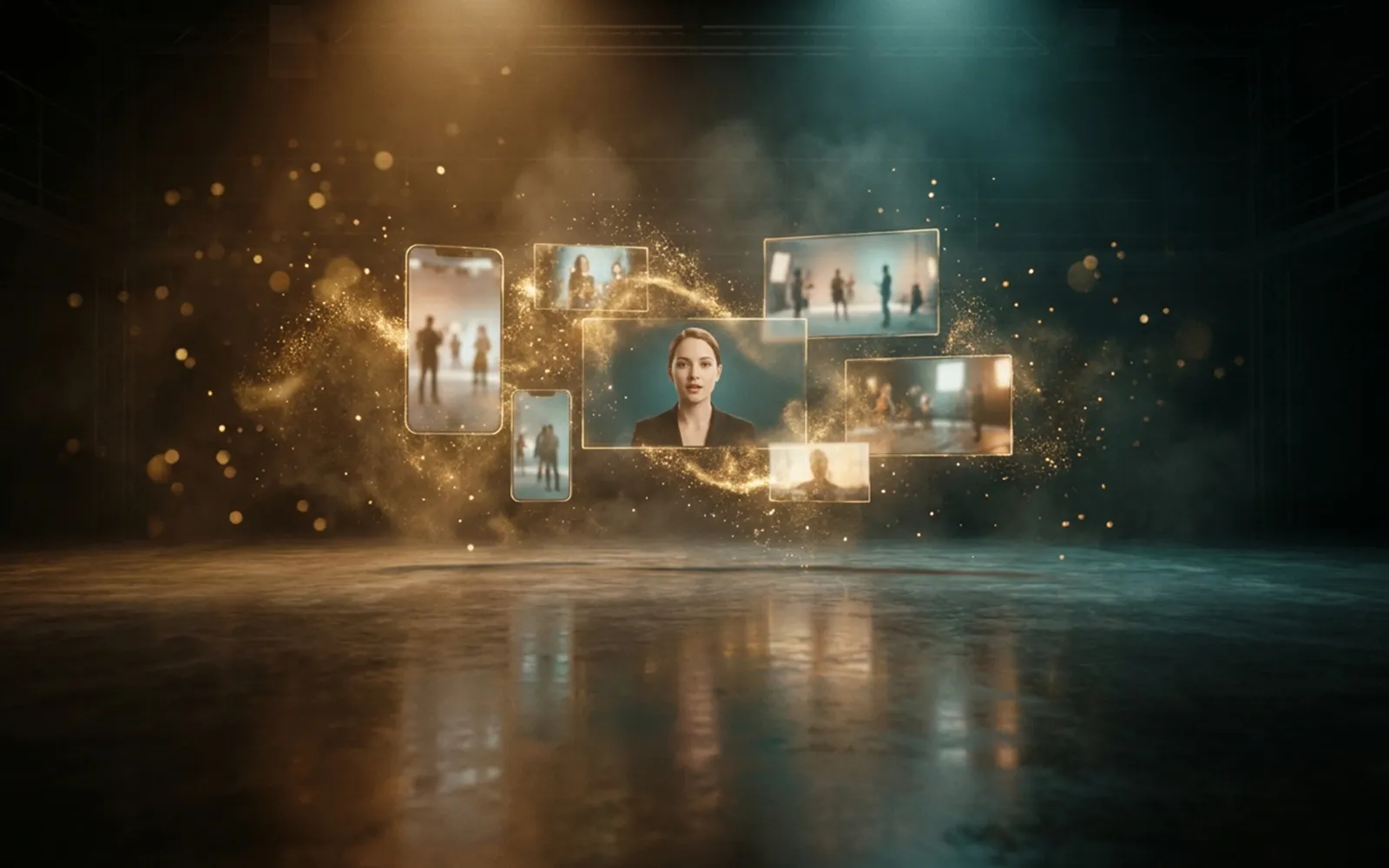
A classic ad means a location, lighting, an operator, actors, editing. Weeks of work and a budget small business can’t carry. AI production changes the economics: we assemble the same 30-second spot in a few days and make edits in hours, not by reshooting.
Why the economics of a spot change
In normal shooting the most expensive thing isn’t the camera — it’s people’s time and logistics: clearing a location, gathering a crew, waiting on weather, reshooting a bad take. Any edit after the shoot means a new shooting day. In AI production an edit is a new prompt or a replaced scene, and it costs hours, not another rental. That’s exactly why AI video, for the first time, makes regular video advertising affordable for small business, not just big-budget brands.
What an AI spot is made of
- Video generation — Sora, Runway, Veo: scenes from a text prompt.
- A virtual presenter — HeyGen, Synthesia: an avatar that speaks your script in three languages.
- Voice and music — synthesized voiceover and a mood track without a separate sound studio.
- Hands-on post — editing, color, sound. AI is the tool; a human drives the final cut.
Where AI still loses
The real emotion of a live person, complex choreography, a recognizable product in close-up with exact texture — shooting is still more honest here. So we don’t pass AI off as something it isn’t: trending reels and shorts we still shoot by hand. AI takes volume and speed; humans take meaning and taste.
What this looks like in a real project
A typical AI campaign isn’t one spot but a series: five to ten creatives for a single advertising job, in one style, across placements and formats. That’s how the ad videos for a property developer in our portfolio worked: a series of ultra-wide spots for media facades, assembled without a single shooting day. When marketing needs the next flight, nobody draws up a new shoot estimate — the series continues in the same style within days. It’s in series mode that AI production’s economics shine brightest.
Frequently asked questions
- How much does an AI spot cost versus a shoot? Several times less: location rental, crew and actors disappear from the estimate — what remains is generation and an editor’s work. The final number depends on length and scene count, but the comparison always holds: days versus weeks, hundreds of dollars versus thousands.
- Can you make an AI avatar of a real person — say, the business owner? Yes: a short recording produces a digital twin that then voices any script — including languages the person doesn’t speak. In a market with three working languages, it’s the fastest way to address every audience in its own tongue.
- Won’t viewers be put off by the “artificiality”? If the spot is assembled carelessly — yes. That’s why a human always drives the final cut: editing, color, sound, rhythm. Viewers react to the quality of the result, not the technology — a well-crafted AI spot reads as regular advertising.
Checklist: is AI video right for you
- You need regular video content — announcements, promos — not one brand film a year.
- The product can be shown without macro shots of exact texture — services, apps, real estate, education.
- The budget can’t carry a full crew, but you need video in your ads now.
- You need the spot in two or three languages — AI voiceover removes the multiplied cost of versions.
- Is the core value live human emotion on camera? Then shooting is more honest: AI still loses here.
Lifehack: start with a single avatar-presenter for recurring announcements. It’s the cheapest entry into AI video — the script changes, the “face of the brand” stays, and you get one consistent content style without shooting every week.
Got a project, not just a read?
Tell us about it — we'll put together a solution for your business.