Gamification in business: when game mechanics actually lift sales
Points and badges don’t work on their own. We break down which game mechanics truly shift customer behavior — through real jobs, not for the sake of “engagement.”

Gamedev, Unity / Unreal Engine
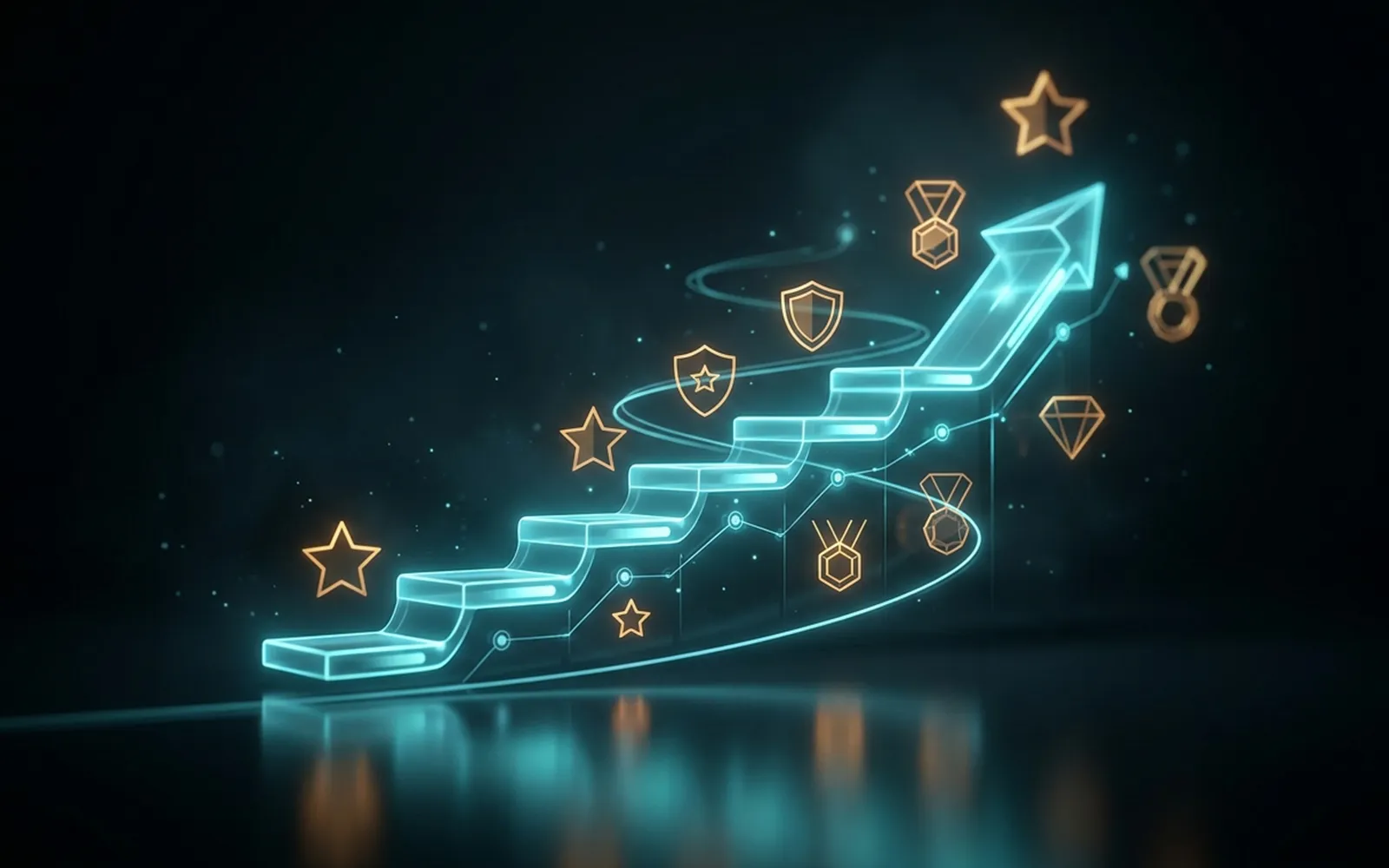
Gamification isn’t “bolting on points.” Game mechanics work only when tied to a real action the business needs: complete a profile, come back on day seven, take a cart to checkout. Without that link, badges become decoration nobody notices.
Why points alone don’t work
A person doesn’t take an action for an abstract point — they take it for the meaning behind the point. If 100 points change nothing in their life, the mechanic is dead from day one. So the rule is simple: first find an action that already benefits the customer, then reinforce it with a game loop — I see progress, I get a clear reward, I want to repeat. A point is just a way to show movement, not the reason to move.
Mechanics that change behavior
- A progress bar: people finish what they started — an 80%-complete profile begs to hit 100%.
- Streaks: daily return locks in via the habit of not “losing the streak.”
- A clear reward for a specific step — a discount, a status, access. Not abstract points.
- Social proof: a rank or status others can see motivates harder than a private one.
Metric first, mechanic second
We come into gamification from gamedev, not marketing — so we treat it as designing a motivation system, not a set of widgets. First the metric we’re moving (retention, average order value, checkout completion), then the mechanic for it. That order cuts the decoration and leaves only what actually affects the money.
Example: how a mechanic lands in a product
Take a learning center losing students between the trial and the second lesson. The metric — trial-to-second-lesson completion. The mechanic for it: after the trial, the student sees a “course map” with the first step filled in and the next one obvious — plus a small bonus that expires if they skip a week. No points, no leaderboards, no badges — one loop: “I see progress → I know the next step → I have a reason not to postpone.” A targeted mechanic like this fits into an existing app or account area in weeks and is tested against one number you already track.
Frequently asked questions
- Does gamification work in B2B? Yes, but the mechanics differ: onboarding progress for a new client, partner statuses and tiers, training simulators for staff. Adults “in suits” respond to progress and status like everyone else — the rewards are just businesslike: terms, access, priority.
- Is it expensive to add gamification to an existing product? Cheaper than it looks: most often it’s not new development but a layer over events the product already records — a purchase, a visit, a completed profile. The difficulty isn’t the code, it’s designing the motivation loop.
- How fast is the effect visible? First shifts on short metrics — returns, checkout completion — show in 2–4 weeks. On long ones — retention, LTV (total revenue per customer over time) — look after a quarter: the data simply won’t accumulate sooner.
Checklist before you implement
- Find an action that already benefits the customer — the mechanic only amplifies it, it doesn’t conjure it.
- Check the reward is clear without a manual and lands right after the step, not “someday.”
- Make sure progress is visible from the first visit — an empty screen of zeros kills motivation.
- Plan a before/after measurement on your chosen metric — otherwise you can’t tell effect from seasonality.
- Start with one mechanic, not five: that way you can see what actually worked.
Lifehack: before adding a mechanic, name the single number it should move. No number — it’s not gamification, it’s decoration.
Got a project, not just a read?
Tell us about it — we'll put together a solution for your business.